
Process Overview
Nickel Plating
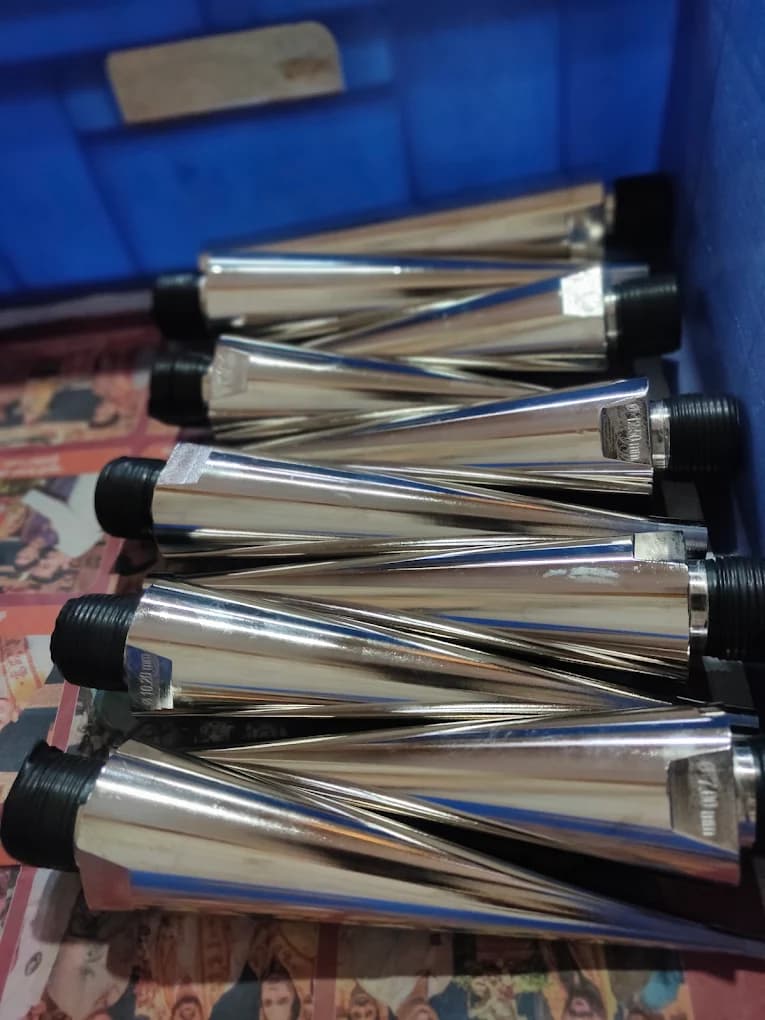
Nickel plating is one of the most versatile electroplating processes, prized for its excellent corrosion resistance, uniform appearance, and ability to serve as an undercoat for chrome plating. We offer bright nickel for decorative applications, matte nickel for a subdued professional finish, and bright nickel chrome — the industry-standard two-layer system for automotive and premium decorative work.
Coating Thickness
Decorative nickel
5 – 25 µm
Engineering nickel
25 – 125 µm
Typical Turnaround
3–5 business days (standard)
Available Types
Types of Nickel Plating
Bright Nickel
A levelling, high-lustre deposit that produces a brilliant, mirror-like finish. Typically used as an undercoat beneath decorative chrome, or as a standalone finish for jewellery, automotive accessories, and consumer electronics.
Matte Nickel
A semi-bright to matte deposit providing uniform appearance without high reflectivity. Preferred in functional applications and as an undercoat where solderability or adhesion is more important than appearance.
Specialist Finish
Nickel Chrome Plating
Bright nickel chrome is a two-stage system where bright nickel is deposited first as a levelling undercoat, followed by a thin decorative chrome layer. It's the industry-standard finish for automotive trim, sanitary fittings, and premium consumer hardware — combining nickel's corrosion resistance with chrome's mirror-bright, wear-resistant surface. This is one of our specialist finishes, purpose-built for clients who need export-grade, showroom-quality plating.
- Two-stage process: bright nickel undercoat, then a thin decorative chrome topcoat
- Mirror-bright, premium aesthetic finish
- Superior corrosion resistance vs. nickel or chrome alone
- Hard, low-friction chrome surface resists scratching and tarnish
- Standard finish for automotive trim, sanitary fittings & premium hardware
Why It Works
Key Advantages
- Excellent corrosion and oxidation resistance
- Good adhesion base for subsequent coatings
- Uniform deposition across complex geometries
- Hardness of 200–400 HV
- Aesthetic versatility — bright, matte, and nickel-chrome options
- Solderability (matte nickel)
Where It's Used
Applications
- →Automotive components and accessories
- →Decorative hardware and fittings
- →Electronics connectors and contacts
- →Jewellery and fashion accessories
- →Sanitary ware and bathroom fixtures
- →Undercoat for chrome plating
Common Questions
Nickel Plating FAQs
How We Do It
Our Process
A proven, step-by-step approach — from surface preparation to final inspection.
Surface preparation & degreasing
Acid pickling & activation
Washing & cleaning
Nickel electrodeposition (Watts or sulphamate bath)
Rinsing & post-treatment
Inspection & packaging
Step 1
Surface preparation & degreasing
Step 2
Acid pickling & activation
Step 3
Washing & cleaning
Step 4
Nickel electrodeposition (Watts or sulphamate bath)
Step 5
Rinsing & post-treatment
Step 6
Inspection & packaging
Wood's nickel strike is used selectively for stainless steel, zinc die-castings, and other difficult-to-plate substrates. For bright nickel chrome, a thin decorative chrome layer is deposited immediately after the nickel bathThough we offer plating on the metals only.