Nickel Chrome Plating: The Complete Guide to Bright Nickel + Chrome Finishes
Most people ask for 'chrome plating' when what they actually need is nickel chrome — a two-layer system that combines nickel's corrosion resistance with chrome's mirror-bright hardness. Here's what it is, how it's built, and why it's the industry standard for automotive trim and premium hardware.
Sunsai Electroplating Team
Industrial Surface Finishing Specialists
In This Article
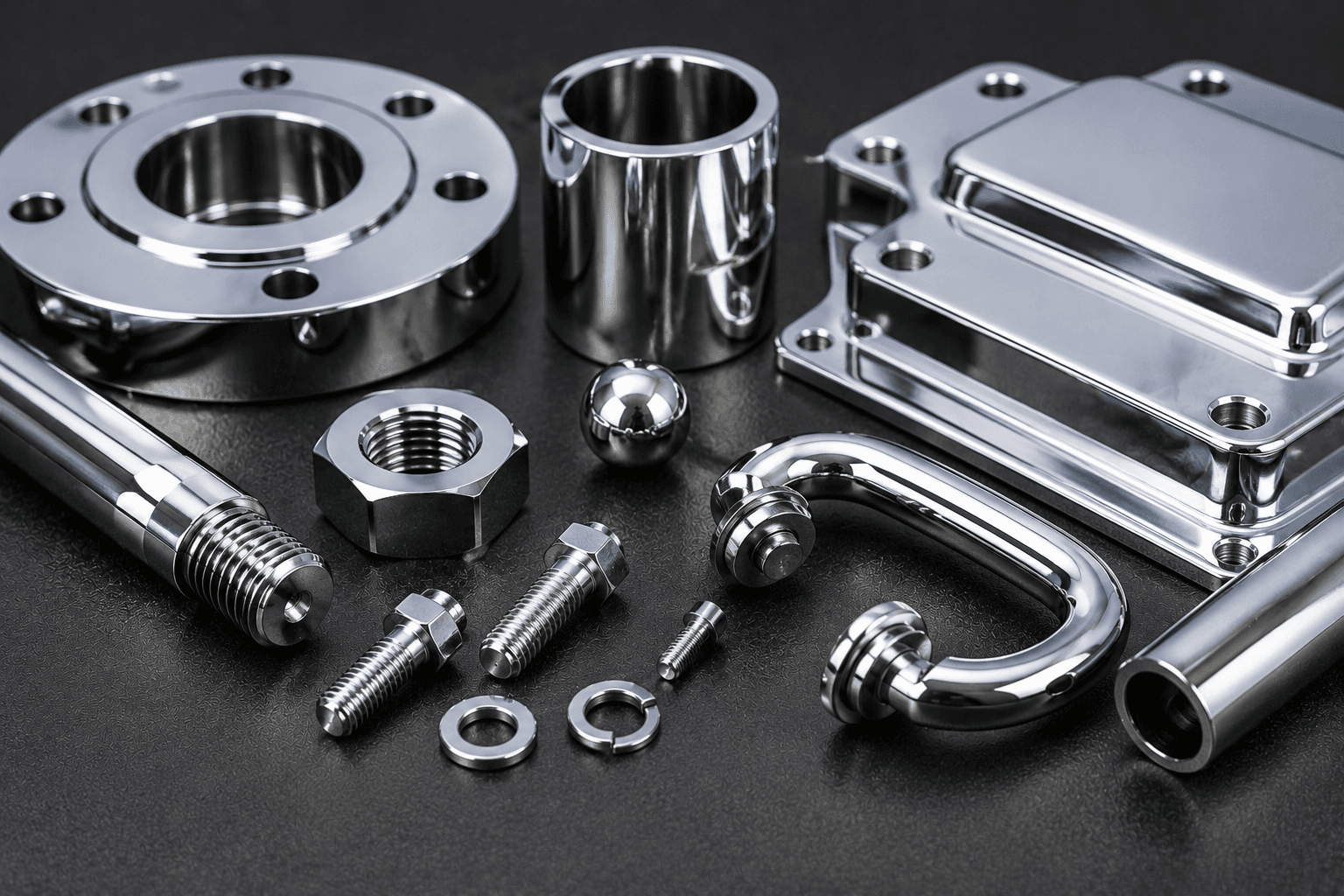
Ask most people what gives a car's bumper trim, a bathroom tap, or a motorcycle handlebar its deep, mirror-bright shine, and they'll say "chrome plating." Technically, they're only half right. What they're looking at is almost always nickel chrome — a two-layer system where bright nickel does the structural and corrosion-resistance work, and a thin chrome topcoat delivers the shine and hardness. Understanding the difference matters if you're specifying a finish for parts that actually need to perform, not just look good on day one.
What is nickel chrome plating?
Nickel chrome plating is a two-stage electroplating process. A layer of bright nickel is deposited onto the base metal first, followed immediately by a much thinner layer of decorative chrome on top. The nickel layer provides the bulk of the coating's corrosion resistance and levels out minor surface imperfections; the chrome layer adds hardness, tarnish resistance, and the bright, reflective finish people associate with "chrome."
Decorative chrome on its own is typically only a fraction of a micron thick. Without a nickel undercoat, it has almost no corrosion-resisting capacity of its own — the nickel is doing the heavy lifting.
Why nickel first, then chrome?
Chrome by itself is a poor standalone coating for corrosion protection. It's applied in a very thin, slightly porous layer, and moisture can work through those microscopic pores over time and attack the base metal underneath. Nickel solves this. A properly deposited bright nickel layer is thick enough to seal the surface, level out polishing marks, and act as a barrier against corrosion, while chrome sits on top purely to deliver the hard, bright, tarnish-resistant surface.
- Bright nickel — levels the surface, provides the primary corrosion barrier
- Decorative chrome — adds surface hardness, mirror brightness, and resistance to tarnishing and UV yellowing
This is why nickel chrome is sometimes called a duplex or composite coating system — each layer is doing a job the other can't do as well on its own.

The nickel chrome plating process, step by step
- Surface preparation & degreasing — removing oils, dirt, and machining residue
- Acid pickling & activation — stripping oxide layers so the coating can bond
- Rinsing & cleaning between stages
- Bright nickel electrodeposition — building the primary corrosion-resistant layer (Watts or sulphamate bath)
- Rinsing & post-treatment of the nickel layer
- Decorative chrome deposition — a thin chrome layer applied immediately after nickel plating
- Rinsing & post-treatment
- Inspection & packaging — checking thickness, adhesion, and surface finish
The chrome stage has to follow the nickel stage quickly, with minimal time for the nickel surface to oxidize — otherwise adhesion between the two layers suffers.
Nickel chrome vs standalone chrome plating
"Chrome plating" in casual conversation almost always means nickel chrome, but true standalone chrome plating (chrome applied directly to the base metal, with no nickel undercoat) does exist — mainly as hard chrome for functional, wear-resistant applications like hydraulic rods, rather than decorative work.
| Factor | Nickel Chrome (decorative) | Chrome-only (hard chrome) |
|---|---|---|
| Primary purpose | Appearance + corrosion resistance | Wear resistance under friction/load |
| Typical thickness | Nickel 5–25 µm + thin chrome flash | 25–250+ µm chrome, no nickel undercoat |
| Typical use case | Automotive trim, taps, furniture hardware | Hydraulic cylinders, industrial shafts, molds |
| Corrosion resistance | High, from the nickel layer | Moderate, depends on base metal and thickness |
For decorative, customer-facing parts, nickel chrome is almost always the better choice. Skipping the nickel layer to save cost usually shows up later as pitting or dulling once the thin chrome layer's pores let moisture through.
Nickel chrome vs standalone nickel plating
Standalone bright nickel (no chrome topcoat) is a legitimate finish on its own — it's used where a warm, slightly yellow-toned bright finish is acceptable and the part doesn't need the extra hardness or the cooler, blue-white tone chrome provides. But bright nickel alone will gradually tarnish and dull with air exposure over time, especially in humid or coastal environments. The chrome topcoat in a nickel chrome system exists specifically to prevent that tarnishing and add scratch resistance, which is why it's the standard choice for parts that get handled or seen up close, like door handles, taps, and automotive trim.
Coating thickness and durability
| Layer | Typical thickness |
|---|---|
| Bright nickel undercoat | 5 – 25 µm (decorative), up to 125 µm (engineering) |
| Decorative chrome topcoat | 0.1 – 0.5 µm (a thin, hard flash layer) |
The nickel layer's thickness is the main lever for long-term durability — a thicker, well-controlled nickel deposit will outlast a thin one significantly under the same environmental exposure, even though the chrome flash thickness on top stays roughly the same either way.
Where nickel chrome plating is used
- Automotive trim, bumpers, grilles, and accessories
- Sanitary ware and bathroom fittings (taps, showerheads, handles)
- Furniture and door hardware
- Motorcycle and bicycle components
- Premium consumer electronics housings
- Decorative statues and architectural fittings
Anywhere a part needs to look premium and hold that appearance for years under regular handling, weather exposure, or UV light, nickel chrome is generally the specified finish rather than chrome or nickel alone.
What to look for in a nickel chrome plating vendor
- Control over nickel layer thickness, not just visual chrome brightness
- Consistent bath chemistry and process documentation across batches
- Experience with your specific base metal (steel, brass, zinc die-cast, etc.)
- Ability to advise on thickness specs for your part's environment, not just quote whatever's requested
A finish that looks identical off the line can perform very differently a year later depending on how much nickel is actually underneath the chrome. If a quote sounds unusually cheap for "chrome plating," it's worth asking directly what nickel thickness is included — that's usually where the cost and the durability both come from.
Frequently Asked Questions
References
Need Nickel Chrome Plating for Your Parts?
Talk to our team about specifying the right nickel thickness for your application and get a free quotation.