Electroplating Cost in Pune: Factors That Affect Plating Prices
Two parts that look almost identical can come back with very different electroplating quotes. Here's what actually drives the price — and why 'per kg' rarely tells the full story.
Sunsai Electroplating Team
Industrial Surface Finishing Specialists
In This Article
Ask three electroplating job shops in Pune for a quote on the same drawing, and it's common to get three different numbers. That's not necessarily a sign that someone is overcharging or underselling — plating cost depends on a surprisingly long list of variables, most of which never show up on a simple 'price per kg' rate card.
This guide breaks down the factors that actually move the needle on electroplating cost, so procurement teams and manufacturers can read a quotation more critically and ask the right questions before committing to a vendor.
Why electroplating quotes vary so much
Electroplating is priced as a process, not a commodity. Two batches of parts with the same weight can require very different amounts of chemical, current, labor, and handling time depending on their shape, finish requirements, and volume. A per-kg or per-piece rate is really a shorthand that bakes in a lot of assumptions — and those assumptions are exactly what changes between suppliers.
The single biggest driver of quotation variance isn't usually the metal being plated — it's the coating specification (thickness, finish, and testing requirements) attached to the part.
1. Metal type and alloy
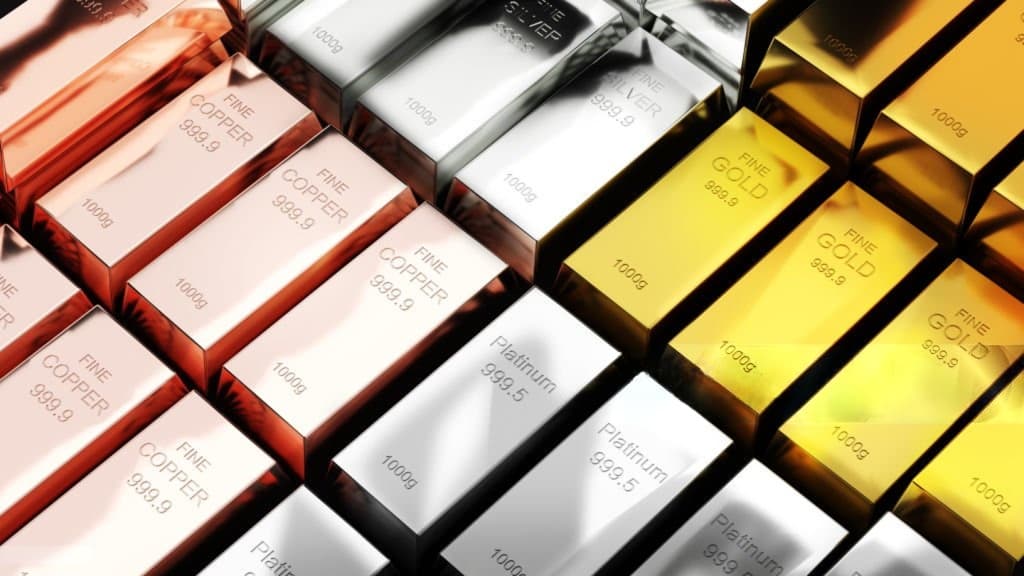
The plating metal itself sets a baseline. Zinc and tin plating are generally the most cost-effective options for general corrosion protection and solderability. Nickel plating costs more due to bath chemistry and process control requirements. Chrome plating — particularly hard chrome — sits higher still because of longer process times and stricter environmental controls. Precious metals like gold or silver are reserved for applications that specifically justify the expense.
- Zinc and tin — typically the most economical for general-purpose corrosion protection and solderability
- Nickel — mid-range cost, driven by bath maintenance and thickness control
- Chrome (decorative) — moderate to higher cost due to multi-layer processes (often copper-nickel-chrome)
- Chrome (hard/industrial) — higher cost from longer deposition times and thicker coatings
- Gold and silver — premium pricing, generally limited to high-reliability electronics or connectors
2. Part size, shape, and geometry
Simple, symmetrical parts plate evenly and predictably. Complex geometries — deep recesses, blind holes, sharp internal corners, or parts with a mix of thick and thin sections — are harder to coat uniformly and often need special fixturing, auxiliary anodes, or slower current density to avoid burning or thin spots. That extra process control adds cost even if the part's weight is unremarkable.
Fixturing is often the hidden line item here. A part that needs a custom rack or jig to hold it in the bath correctly carries a setup cost that gets spread across the batch — which is one reason small orders of geometrically awkward parts can look disproportionately expensive per piece.
3. Coating thickness and layer specification
Thicker coatings require more time in the bath, more current, and more chemical consumption, so cost scales with microns specified — though not always linearly, since very thin or very thick specs can each bring their own process challenges. Multi-layer systems, such as a nickel underlayer beneath chrome or tin, add both material and processing steps compared to a single-layer finish.
Over-specifying thickness 'to be safe' is one of the most common ways procurement teams inflate their own plating cost. Matching the spec to the actual functional requirement — rather than defaulting to the thickest option — is usually the easiest lever to pull.
4. Surface condition and pre-treatment needs
Parts arriving with rust, scale, oil, weld spatter, or old coatings need additional cleaning, descaling, or stripping steps before plating can even begin. This is one of the more variable cost factors, since it depends on how the part was manufactured and stored before it reaches the plating line rather than on the plating spec itself.
- Machined or as-rolled parts with light oils — standard cleaning cycle
- Parts with rust or scale — additional descaling or acid pickling required
- Parts with an existing coating to be stripped — added stripping step and disposal handling
- Welded or brazed assemblies — extra care needed around weld zones and flux residue
5. Barrel plating vs rack plating
Small, robust parts like fasteners are usually barrel plated — tumbled in bulk inside a rotating barrel, which is efficient and lowers per-piece cost. Larger, delicate, or cosmetically sensitive parts are individually rack mounted, which gives better thickness control and finish quality but takes more labor per part and therefore costs more.
| Process | Best suited for | Cost profile |
|---|---|---|
| Barrel plating | Small, sturdy parts (fasteners, small brackets) | Lower cost per piece, high throughput |
| Rack plating | Larger, delicate, or cosmetic parts | Higher labor input, better finish and thickness control |
6. Batch size and minimum order quantity
Plating lines have fixed costs per run — bath setup, rack loading, quality checks — that get spread across however many parts go through together. Larger batches dilute these fixed costs, which is why per-piece pricing usually drops as volume increases, while very small or one-off orders often carry a minimum job charge regardless of part weight.

7. Testing, inspection, and certification
Standard visual and thickness checks are typically included in a base quote. Requirements like salt spray testing, adhesion testing, third-party certification, or detailed inspection reports for automotive or export customers add both time and cost, since they often involve sending samples out or running dedicated test cycles.
8. Turnaround time and logistics in Pune/PCMC
Pune and the surrounding PCMC industrial belt have a dense cluster of job-work plating shops, which generally keeps transport distances short for local manufacturers. Even so, rush turnaround — jumping a queue ahead of scheduled batches — typically carries a premium, since it disrupts a plating line's planned bath usage and scheduling. Pickup and delivery logistics, especially for heavier or bulkier parts, can also factor into the final quotation depending on the vendor's location relative to yours.

How platers in Pune typically structure quotations
Quotations are generally built around one of a few structures, and knowing which one you're being offered makes comparisons easier.
- Per-kilogram job work rate — common for bulk, uniform parts like fasteners or brackets
- Per-piece rate — common for parts with consistent size and geometry across the batch
- Per-batch or lot pricing — common for smaller, custom, or mixed-geometry orders with setup costs involved
- Area-based pricing — occasionally used for large flat or sheet components where coverage area matters more than weight
None of these structures is inherently better or worse — the right one depends on the part. A vendor quoting per kg for a batch of geometrically complex, low-weight brackets, for instance, may be masking a fixturing cost that would be clearer in a per-piece or per-batch structure.
How to reduce plating cost without cutting quality
- Specify coating thickness to the actual functional requirement rather than a default 'thick is safer' spec
- Consolidate orders into larger batches where production schedules allow
- Simplify part geometry at the design stage where possible, to reduce fixturing needs
- Clarify testing and certification needs upfront, rather than adding them after quoting
- Group similar finishes and metals across projects to reduce the number of distinct process setups
"The cheapest quote on paper isn't always the cheapest part once you account for rework, rejected batches, or a spec that had to be tightened after the fact."
— Sunsai Electroplating Team
Common mistakes when comparing quotes
The most frequent mistake is comparing headline rates without confirming they cover the same scope. A lower per-kg rate that excludes pre-treatment, testing, or a required underlayer isn't actually a lower price — it's an incomplete one.
- Not confirming whether pre-treatment and stripping (if needed) are included
- Comparing per-kg rates across different coating thickness specs
- Overlooking minimum order or minimum job charges on small batches
- Assuming barrel and rack plating quotes for the same part are directly comparable
- Leaving testing and certification requirements out of the initial quote request
Getting an accurate quote for your parts
The most reliable way to get a comparable, accurate electroplating quote is to share a complete picture upfront: material and alloy, part geometry or drawing, coating type and thickness spec, batch size, and any testing or certification requirements. Vendors quoting against the same complete brief will give numbers that are actually comparable — and that upfront clarity is usually what prevents cost surprises later in the order.
If you're evaluating electroplating suppliers in Pune for an upcoming order, sharing your drawing and specification with a couple of shops side by side is the most practical way to see how these factors play out for your specific parts.
Frequently Asked Questions
References
Need an Accurate Electroplating Quote?
Share your part drawing and specifications with our team for a free, detailed quotation.